How to Create the Ultimate Art Department Toolkit
An art department toolkit is the foundation of every successful set. After working in the Art Department on more than 30 feature films, television series, independent projects, and commercial shoots, I’ve learned exactly what belongs in a professional art department toolkit—and how to build one smartly, starting with what you already have and leveling up over time.
I’ve served as a Production Designer, Art Director, and Leadman across productions of all sizes, and you can view my film credits on IMDb. My hands-on experience—from indie sets to larger productions—has shaped the toolkit you’re about to explore, built not just from theory but from real, on-the-ground production work.
Overview: What You’ll Learn in This Guide
In this guide, you’ll learn how to:
- Build your first art department toolkit using tools you already own
- Charge a kit rental fee with confidence, even as a beginner
- Grow your toolkit with smart upgrades as you level up your career
- Organize your tools efficiently for fast moves and on-set emergencies
- Protect your gear, your investment, and your professional reputation
- Get insider tips on what top crew members always carry — and why it matters
Whether you’re stepping onto set for the first time or looking to refine your pro setup, this guide will walk you through everything you need to build a toolkit — and a career — you can be proud of.
Consider the art department toolkit as the artist’s palette, not of colors but of capabilities.
Who This Art Department Toolkit Is For
Whether you’re just starting out or already deep into your Art Department career, having the right tools makes every job easier, faster, and more professional.
This guide is designed for:
- Production Designers (PD): Building creative visions from the ground up.
- Art Directors (AD): Overseeing execution and managing crews across multiple departments.
- Leadpersons / Leadmen: Handling daily logistics, crew management, and on-set problem solving.
- On-Set Dressers: Managing set resets, continuity, and last-second adjustments during shooting days.
- Set Decorators: Planning, sourcing, and managing decor elements from prep through wrap.
- Construction Coordinators: Organizing set builds and making sure construction meets design specs.
- Carpenters: Building flats, walls, platforms, furniture, and specialty scenic pieces.
- Props Masters and Assistant Props Masters: Handling, prepping, and repairing hand props and specialty builds.
Whether you’re pushing a fully stocked cart for resets, staging furniture in a remote location, troubleshooting on the fly, or dressing multiple sets in a day, a professional art department toolkit is your portable command center — and your safety net when everything’s moving fast.
Start Building Your Art Department Toolkit Step-by-Step
Every great art department toolkit starts small.
You don’t need thousands of dollars’ worth of gear to get your foot in the door. In fact, many seasoned crew members started with just a hammer, a screwdriver set, a tape measure, and a cordless drill — and built their kits one job, one upgrade, one paycheck at a time.
Before you start buying anything new, take inventory of what you already have. Check your garage, your workshop, your junk drawer. You might be surprised how many basics are already within reach.
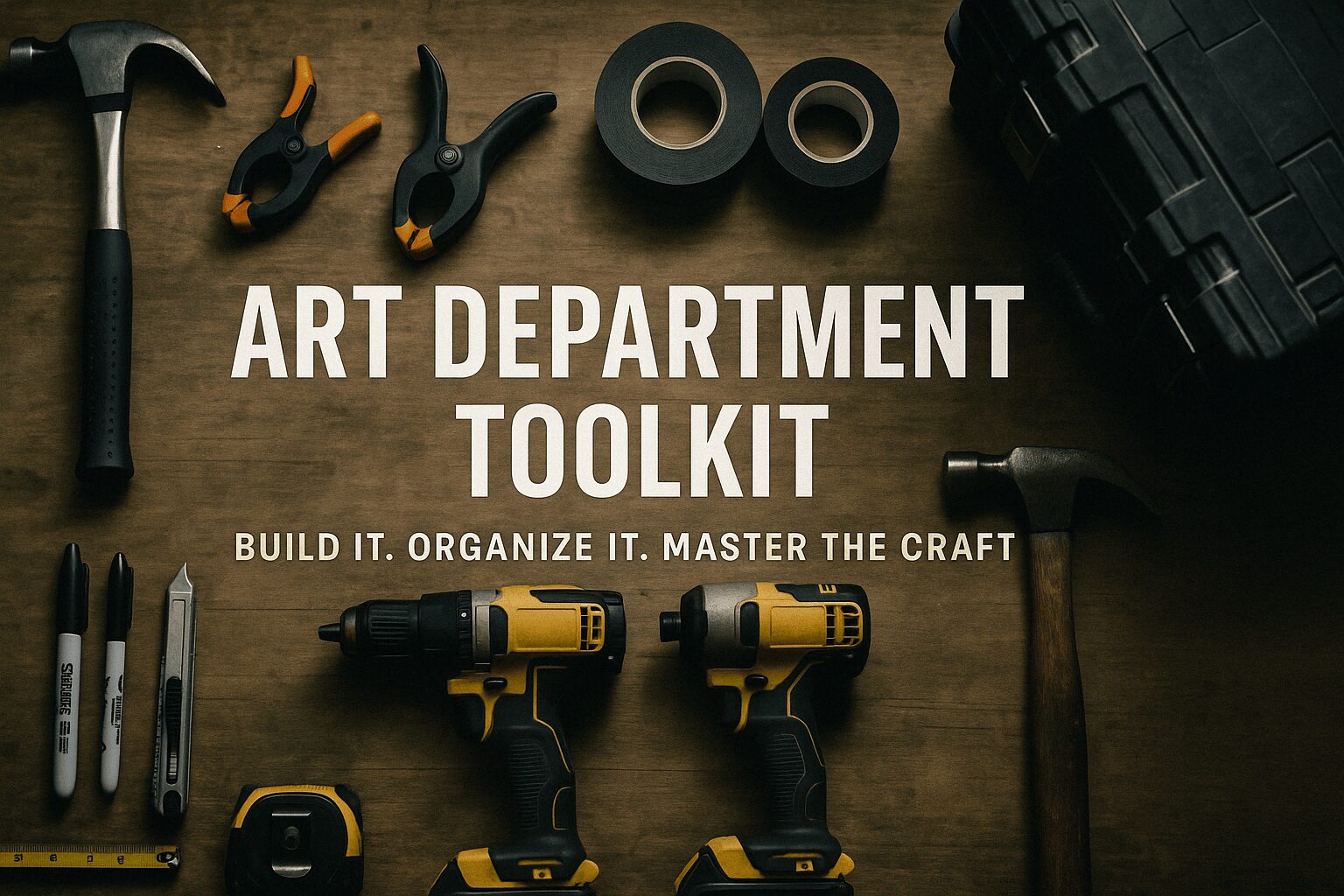
Here’s what to look for as you start gathering your first toolkit:
- Hammer (a good claw hammer will do)
- Phillips and flathead screwdrivers
- Tape measure (at least 25′)
- Box cutter or utility knife
- Cordless drill and basic drill bits
- Set of clamps (spring clamps, C-clamps, or bar clamps)
- Sharpies (preferably multiple colors)
- Painter’s tape
- Basic work gloves
- Safety glasses
If you have just these tools, you already have the beginnings of a working art department toolkit.
From here, it’s all about smart, strategic upgrades — and making your kit work for you on every set.
In the next section, I’ll show you how to turn your starter kit into a money-earning asset with just a few key additions.
Starter Art Department Toolkit: Minimum Essentials to Charge a Kit Fee
Once you have a few essential tools gathered, you’re closer than you think to having a legitimate starter art department toolkit.
At this stage, you can begin offering a basic kit rental fee on productions — a small but important step toward earning back your investment and funding your future upgrades.
Here’s the minimum toolkit you should have before charging a kit fee:
- Hammer (standard claw hammer)
- Tape measure (at least 25′)
- Box cutter/utility knife + spare blades
- Cordless drill with charger and assorted bits
- Screwdrivers (Phillips and flathead)
- Adjustable wrench
- Pliers (standard and needle-nose)
- Set of clamps (spring clamps or bar clamps)
- Sharpies (black, plus a few color options)
- Blue painter’s tape and gaff tape
- Work gloves and safety glasses
- Small level
- Utility scissors
- Small flashlight or headlamp
- Zip ties (assorted sizes)
- Multi-tool (Leatherman or similar)
This toolkit covers basic set construction, dressing, rigging, breakdowns, and quick fixes — everything an entry-level crew member needs to be functional and valuable on set.
🎬 Pro Tip:
Always keep backup batteries, extra Sharpies, and a fresh roll of gaff tape tucked into your bag. You’ll save yourself (and your department) more times than you can count.
Upgrade Your Art Department Toolkit: Growth Ladder from Starter to Pro
Once you’ve built your starter art department toolkit, the real fun begins: upgrading your gear to take on bigger projects, faster builds, and more responsibilities.
Think of your kit like your career — it should grow steadily, with each new tool making you more efficient, more professional, and more valuable on set.
Here’s how to level up your toolkit step-by-step:
Starter Art Department Toolkit Plus Essential Upgrades
After your minimum essentials are in place, your first upgrades should focus on speed, convenience, and versatility.
These additions make you faster, more self-sufficient, and ready for unexpected challenges.
Key Upgrades to Add:
- Cordless hot glue gun (battery-operated for quick fixes)
- Oscillating multi-tool (for cutting, sanding, and scraping in tight spaces)
- Compact shop vac or Dustbuster (for quick cleanups on set)
- Jigsaw (for detailed wood and plastic cuts)
- Ratchet straps and tie-downs (for securing large set pieces)
- Laser level (for precise, fast layouts)
- Staple gun (manual or cordless)
- Set of moving blankets (protecting props, furniture, and walls)
- Backup battery packs for all cordless tools
Intermediate Art Department Toolkit Plus Pro-Level Tools
As you move into larger productions or take on leadership roles like Leadperson, Set Dresser, or Art Director, it’s time to invest in serious tools that allow you to tackle bigger builds and more demanding setups.
Pro-Level Tools to Add:
- Table saw or portable miter saw (for major set construction)
- Cordless impact driver (for heavy-duty fastening jobs)
- Circular saw (for fast straight cuts)
- Full ToughSystem or Packout modular storage setup
- Extended clamp collection (bar clamps, C-clamps, spring clamps in various sizes)
- Heavy-duty staple gun and specialty fasteners
- Dedicated tool belt or tool backpack
- High-lumen LED work lights
- Large adjustable wrenches, crowbars, and bolt cutters
- High-capacity power banks or portable inverters for on-site charging
🎬 Pro Tip:
Every tool you add should either save you time, improve your craftsmanship, or make you more self-reliant on set. If it doesn’t, skip it and invest elsewhere.
How I Organize My Art Department Toolkit On Set
A great art department toolkit isn’t just about what you carry — it’s about how you carry it.
Organization saves time, protects your tools, and shows department heads you’re serious about your craft.
Over the years, I’ve refined my system to be tough, efficient, and quick to deploy no matter where the production takes me. You can view examples of my production design and art direction work at Marshall Artz Studio Portfolio.
My Go-To Setup: Dewalt ToughSystem Toolboxes
Here’s how I break down my setup:
- Top Box (Daily Grab Kit):
Tape measure, Sharpies, box cutter, clamps, gloves, gaff tape, and quick-fix items — the tools I use constantly. - Middle Box (Power Tools Kit):
Cordless drill, impact driver, oscillating tool, jigsaw, glue gun, batteries, charger, specialty bits. - Bottom Box (Heavy Gear and Set Supplies):
Ratchet straps, moving blankets, small vac, staple gun, laser level, backup consumables (tape, zip ties, blades).
Each box stacks securely, making it easy to move everything with one hand while carrying a coffee in the other — a critical skill on busy sets!
How I Label and Mark My Tools
Tool loss is part of the Art Department world — unless you prepare for it.
I take a few simple steps to keep my gear identifiable and minimize losses:
- Color-Coding:
I use a distinct paint color (like neon green or bright orange) to mark all my tools. - Engraving:
I etch my initials or a small symbol into expensive tools like drills and saws. - Labeling Batteries and Chargers:
Using a label maker, I tag every battery and charger with my name and phone number — especially important for shared charging stations. - Invisible Ink Markers:
For bonus protection, I sometimes add a UV-invisible ink marking inside tool handles, only visible under a blacklight.
🎬 Pro Tip:
If you ever loan out a tool on set, make it a habit to write it down immediately — or kiss it goodbye.
Why Organization Pays Off
A well-organized art department toolkit doesn’t just protect your investment — it builds your reputation.
Producers and department heads notice the crew members who show up prepared, stay efficient, and can solve problems fast.
And nothing solves problems faster than knowing exactly where your tools are when the clock is ticking.
An organized toolkit doesn’t just help you — it helps the entire production move smoother. Fast fixes, on-the-fly adjustments, and proactive problem-solving all strengthen collaboration across departments.
Essential Tools for Film, TV, and Commercial Art Department Work
Every art department toolkit should cover a wide range of jobs — from basic set construction to detailed set dressing to emergency on-the-fly fixes.
Here’s a breakdown of the essential tools you’ll want to carry, organized by category for maximum efficiency.
Hand Tools for Art Department Crews
The foundation of every set builder’s kit. Reliable, simple, and absolutely necessary.
- Claw hammer (framing hammer optional)
- Screwdrivers (Phillips and flathead, multiple sizes)
- Tape measures (at least one 25′ and one 100′ tape)
- Utility knife/box cutter with extra blades
- Adjustable wrench
- Set of pliers (needle-nose, standard, and locking)
- Allen wrenches (standard and metric)
- Pry bar (small and large)
- Staple puller and nail puller
- Small level (torpedo level for tight spaces)
- Speed square and framing square
- Chalk line
- Mini Sledge Hammer (2–3 lbs): Handy for striking rigging anchors, demolition, and heavy set work.
Power Tools for Film and TV Set Construction
Cordless is king on active sets. Choose lightweight, durable models when possible.
- Cordless drill/driver and impact driver
- Paddle Bits Set: For quickly drilling large holes in wood — e.g., for pipe fittings, conduit, wire runs through flats.
- Oscillating multi-tool
- Cordless jigsaw
- Compact circular saw
- Portable table saw or miter saw (for major builds)
- Cordless hot glue gun
- Cordless staple gun
- Battery packs and fast chargers
- Small shop vac (Corded or Cordless)
- Brad Nailer (Cordless Preferred): Essential for fast, clean installation of thin trim, frames, molding, lightweight builds.
- Sawzall (Reciprocating Saw): Critical for fast deconstruction, strike days, or cutting heavy wood, plastic, metal.
- Impact Wrench (Cordless): Heavy-duty fastening for steel frames, platform bolts, outdoor builds.
🎬 Pro Tip:
Always label your batteries and chargers! They’re the first things to go missing at the charging station.
Manual and Precision Tools for Set Dressing and Builds
Perfect for fine-tuning, installing, and finessing props and set pieces.
- Heavy-duty scissors and utility shears
- Precision knives (X-Acto or Olfa)
- Staple guns (manual and/or electric)
- Heat Gun
- Clamps (spring clamps, C-clamps, bar clamps — assorted sizes)
- Ratchet straps and tie-downs
- Measuring wheels (for large outdoor sets)
- Laser measurer and laser level
- Furniture sliders and moving straps
- Wall Hanging Kit: Anchors, picture wire, D-rings, hooks — essentials for mounting art, signage, light set dressing.
Set Dressing and Rigging Tools for Film and TV
Set dressing is an art form — and these tools are the brush and palette.
- Zip ties (assorted sizes and colors)
- Rope, wire, and bungee cords
- Gaff tape (black, white, and neutral tones)
- Painter’s tape (multiple widths)
- Velcro rolls
- Moving blankets and furniture pads
- Rubber mallet
- S-hooks and quick links for hanging set pieces
- Safety Cones / Caution Tape: For marking hazard areas during construction or rigging.
Cleaning and Surface Prep Tools for the Art Department
Because sometimes the most important job is making something look perfect on camera.
- Shop towels and microfiber cloths
- Goo Gone or adhesive remover
- Magic erasers
- Simple Green or mild all-purpose cleaner
- Dustbuster or small handheld vac
- Push broom and small dustpan
- Gloves (work gloves and nitrile disposable gloves)
- Dust Masks and PPE Kits: Respirators for paint fumes, sanding, sawdust — overlooked but critical.
Tech Tools for Production Designers and Art Directors
Production Designers and Art Directors often carry additional tools to keep the creative and logistical sides flowing.
- Laptop with production design software (SketchUp, Photoshop, etc.)
- Portable external hard drive (back up everything)
- Digital camera or phone with a gimbal/stabilizer
- Memory cards (always carry extras)
- Chargers, adapters, and portable power banks
- Label maker (for organizing bins, cases, and locations)
- Walkie talkie or set communication apps
- Surveillance earpiece for discreet communication
- iPad or tablet for quick set drawings and notes
Optional Tools for Digital Workflow:
- CAD Software (SketchUp, AutoCAD)
- Adobe Photoshop or Illustrator
- Digital asset management apps (Dropbox, Google Drive folders for props/reference)
- Project management tools (Trello, Asana for production schedules)
- Augmented Reality (AR) Measuring Apps (for fast location measurements)
- Virtual Set Design Software (like SketchUp Viewer, Unreal Engine virtual sets)
- Digital Asset Management Platforms (Dropbox, Google Drive with production folders)
- Project Management Apps (Trello, Monday.com for team coordination)
A well-rounded art department toolkit isn’t built overnight.
It’s built piece by piece, project by project, as you sharpen your skills and expand your role on set.
Every tool you add is another step toward becoming the crew member directors and producers fight to hire again.
🎬 Pro Tip: Choosing Tools Wisely
- Review your script and locations before buying new tools.
- Prioritize multi-purpose, durable tools that can serve across projects.
- Budget smart: rent specialized tools when needed, buy the workhorses.
- Stay open to new technology — the right app can save hours on set.
Art Department Toolkit Rental Fees: How Much to Charge and Why
As your art department toolkit grows, so does its value — and protecting that investment means charging a proper kit rental fee when you work on set.
Many productions expect crew members to bring their own tools, but that doesn’t mean you should provide them for free.
Charging a kit rental isn’t just about making extra money — it’s about recognizing the wear and tear your gear takes, the time you spend maintaining it, and the professional standards you bring to the job.
Why You Should Charge a Kit Rental Fee
- Protect Your Investment:
Tools break, batteries die, blades dull — your rental fee offsets replacement costs. - Level the Playing Field:
Other departments (camera, sound, grip) charge kit rentals. The Art Department deserves the same respect. - Demonstrate Professionalism:
Charging a reasonable kit fee shows you take your role — and your equipment — seriously. - Create Recurring Income:
Over time, kit fees can add up to thousands of dollars in extra earnings.
🎬 Pro Tip:
Always track your tool expenses — batteries, replacement bits, new additions — so you can adjust your kit fee if needed over time.
How Much Should You Charge?
Rates vary depending on the market, the size of your toolkit, and the type of production, but here’s a general guide:
| Production Type | Typical Kit Rental Fee (Per Day) |
|---|---|
| Low-Budget Indie Film | $10–$25 |
| Commercial (Local/Regional) | $25–$50 |
| Television (Cable/Streaming) | $30–$75 |
| Feature Film (Studio/Union) | $50–$100+ |
Factors That Influence Your Fee:
- Size and quality of your toolkit
- Number of power tools included
- Whether you bring specialty items (table saws, laser levels, etc.)
- If you provide consumables (tape, blades, zip ties)
Tips for Negotiating Kit Fees
- Bring It Up Early:
Mention your kit and its rental fee when discussing your rate, not after you’re hired. - Be Flexible, Within Reason:
If it’s a passion project or very low-budget indie, consider adjusting slightly — but don’t give it away. - Have a List Ready:
Professionalism matters — some crew send a one-page “Kit Rental Inventory” to production when asked. - Stand Your Ground Politely:
You’re not asking for a favor — you’re offering professional-grade gear that saves the production time and money.
Staying Organized On Set: Art Department Toolkit Tips to Save Time
When you’re deep into a shoot day — with directors shouting, actors waiting, and the clock ticking — the last thing you want is to waste time digging for a missing tool.
An organized art department toolkit isn’t just a convenience; it’s your secret weapon for surviving the chaos of set life.
Here are the habits that keep my toolkit — and my sanity — intact on even the most demanding productions:
Reset Your Toolkit Nightly
At the end of every shoot day, take ten minutes to:
- Put tools back in their designated spots
- Recharge batteries and swap in fresh ones
- Restock consumables like tape, blades, and zip ties
- Wipe down dirty tools (especially on dusty, muddy, or exterior sets)
🎬 Pro Tip:
A clean, fully-stocked kit every morning gives you a serious advantage when unexpected problems hit.
Keep a Daily Quick-Grab Bag
Instead of lugging your entire toolkit to every location, maintain a smaller “daily grab bag” packed with:
- Tape measure
- Box cutter
- Sharpies
- Painter’s tape
- Gloves
- Small flashlight
- Zip ties
- Utility knife
- Multi-tool
This lightweight kit saves steps and stress during fast company moves or remote setups.
Rolling Carts:
If you’re working as an On-Set Dresser or Leadperson, investing in a lightweight rolling cart can be a game-changer.
Load it with your daily grab kit, furniture pads, cleaning supplies, and quick-fix gear so you can move fast without wasting trips back to base.
For indoor sets or smooth surfaces, a Rubbermaid Commercial Utility Cart with structural foam shelves and hard casters is a durable starter option.
If you’ll be working on outdoor locations or rough terrain, upgrade to the Rubbermaid Heavy-Duty Utility Cart with Pneumatic Tires for easier transport across dirt, gravel, and uneven ground.
Inventory Your Kit at Wrap
At the end of a shoot — or even at the end of a week on longer productions — take five minutes to do a quick visual inventory:
- Are any tools missing?
- Are batteries or chargers misplaced?
- Are consumables low and need refilling?
- Has anything broken or worn out beyond use?
Keeping an updated mental (or physical) checklist means you’re never caught off guard on the next gig.
Create an Emergency Fix Kit
There will be days when a last-second prop breaks, a wall panel shifts, or a sign falls down mid-scene.
Prepare a small, ultra-portable emergency kit stocked with:
- Gaff tape
- Zip ties
- Super glue
- Quick clamps
- Fishing line
- Velcro strips
- A few essential hand tools
Having this kit ready can literally save a shot — and make you a hero to the director and producers.
An organized toolkit isn’t just about saving yourself time — it’s about building trust with your department, your crew, and the production as a whole.
People notice the person who fixes problems quietly and quickly — and they remember when it’s time to hire again.
Download Your Free Printable Art Department Toolkit Checklist
Building your art department toolkit is a journey — and staying organized along the way makes all the difference.
To help you keep track of your tools, upgrades, and essentials, I’ve created a free printable checklist you can download and use anytime.
Whether you’re just starting out with the basics or expanding into a full pro-level setup, this checklist will make it easier to:
- Track what you already own
- Plan smart future upgrades
- Prepare for each new production
- Keep your gear organized and ready for action
🎬 Download Your Free Checklist Now:
👉 [Click here to get the Free Art Department Toolkit Checklist]
(Insert signup form or link here once it’s ready.)
Tip: Print a copy and keep it in your toolbox, work van, or production bag. Mark off items as you add them, and update it as your toolkit grows.
Invest in your future — one tool (and one smart upgrade) at a time.
Recommended Starter Toolkit
If you’re ready to start building your own art department toolkit, here are a few essential tools I personally recommend to get you going:
- DeWalt ToughSystem Rolling Toolbox
- Cordless Drill/Driver Kit
- Cordless Impact Driver
- Oscillating Multi-Tool for Set Work
- Cordless Brad Nailer
- Heavy-Duty Staple Gun
- Portable Label Maker for Set Organization
These tools form a strong foundation for working across film, television, and commercial productions — and they’re all part of what’s helped me succeed on over 30 different sets.
Conclusion: Build Your Future, One Tool at a Time
Your art department toolkit isn’t just a collection of tools — it’s a reflection of your growth, your dedication, and your future in the film and television industry.
Every clamp, every drill bit, every Sharpie you add is a step toward becoming the crew member directors and producers can count on when the pressure is on.
You don’t need the most expensive gear or the biggest setup to succeed.
You just need to start where you are, invest smartly, and commit to leveling up your skills and your tools as you go.
Here’s your roadmap in a nutshell:
- Gather what you already have.
- Build a solid starter toolkit you can charge a rental fee for.
- Upgrade piece by piece with every new opportunity.
- Stay organized, stay professional, and keep learning.
It’s not about having everything today — it’s about building a toolkit, a career, and a reputation one smart decision at a time.
🎬 Pro Tip:
Your toolkit opens doors — but your professionalism and attitude keep them open.
If you found this guide helpful, don’t forget to bookmark it, share it with your crew friends, and download the free printable checklist to stay on track.
Here’s to building the future you deserve — one tool at a time.
Your art department toolkit will evolve as your skills do. Stay curious, stay adaptable, and never stop upgrading — both your tools and your creative vision.